
image
The Blue Book A History of Western Province Cricket, 1890–2011
This book provides the first comprehensive and complete history of Western Province cricket and the Cape Cobras in the 121 years from 1890 to 2011.It goes beyond any similar sports history in South Africa to date, to reveal the rich history of cricket in a region with the longest tradition of playing in the country and the continent.

One Law, One Nation

one-law-one-nation-front-cover

One Law, One Nation Lauren Segal and Sharon Cort

On 10 December 2011, it will be 15 years since Nelson Mandela signed the final draft of the new South African Constitution at a Stadium in the township of Sharpeville. In celebration of the 15th anniversary of this momentous occasion, the book One Law, One Nation charts the story of the long fight for constitutional rights in South Africa, and the astonishing obstacles and complexity that lay behind the constitution-making process after 1990.

photofrom10dec2011mandelaholdinglaurensbookinqunuyesterdayweb

roelf-and-cyril-650


Preview the newest releases

one-law-one-nation-covwebsml1

Click the cover to preview pages from this book

One Law, One Nation by Lauren Segal & Sharon Cort

Click here for more information or to purchase online

diesel_dust_covwebcorrectfrontpg

Click the cover to preview pages from this book

Diesel & Dust by Obie Oberholzer

Click here for more information or to purchase online


mapping-sa-covwebfrontpg

Click the cover to preview pages from this book

Mapping South Africa by Andrew Duminy

Click here for more information or to purchase online


zapiro-the-last-sushi-covwebsml

Click the cover to preview pages from this book

The Last Sushi by Zapiro

Click here for more information or to purchase online


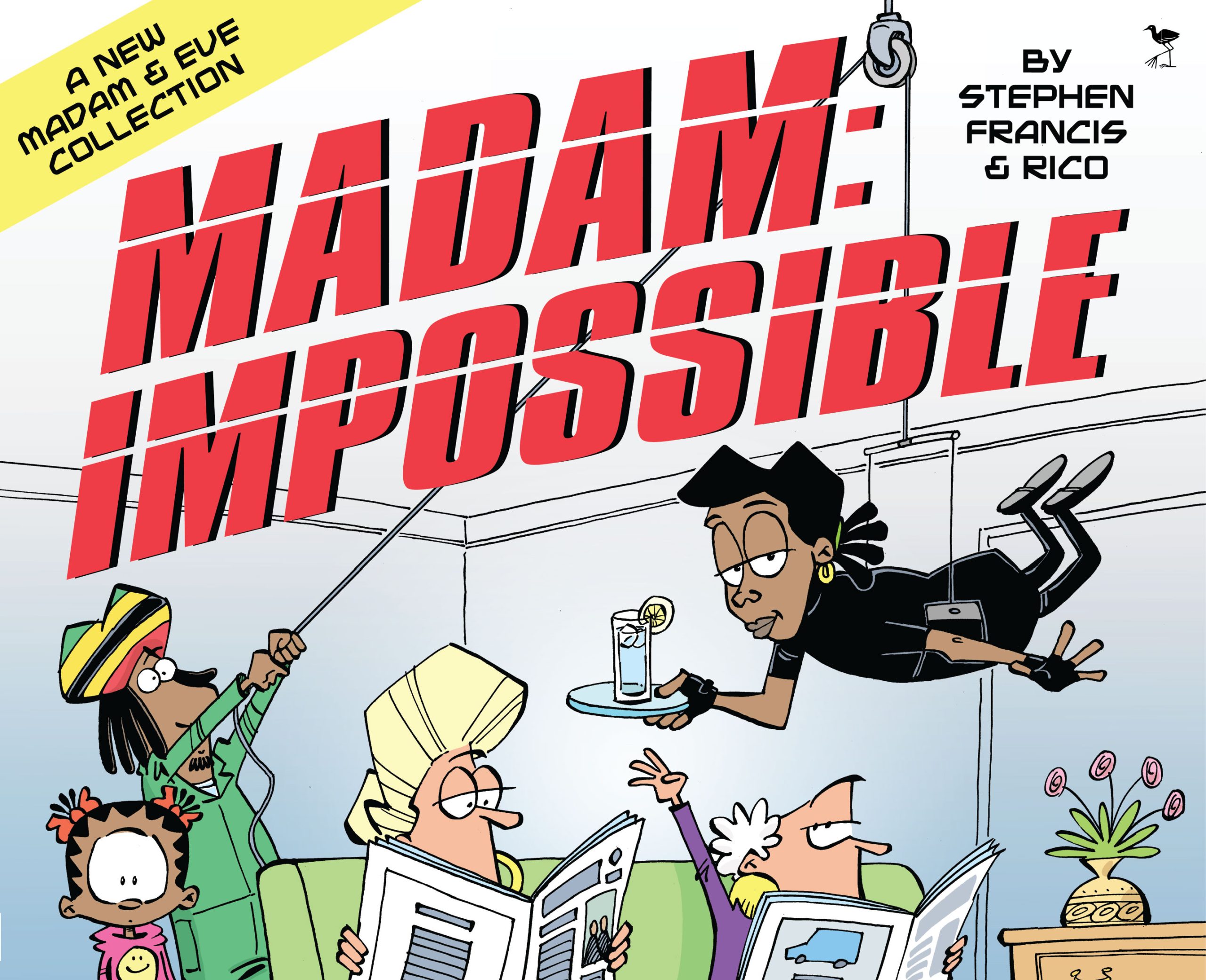
madam_eve_pothole_covwebfrontpg

Click the cover to preview pages from this book

The Pothole at the End of the Rainbow by Stephen Francis and Rico

Click here for more information or to purchase online


kadar_asmal_covwebfrontpg

Click the cover to preview pages from this book

Politics in My blood by Kader Asmal and Adrian Hadland with Moira Levy

Click here for more information on the softback edition or to purchase online

Click here for more information on the hardback edition or to purchase online


The Big Stick

The Jacana Literary Foundation is pleased to announce the latest title to receive funding from the foundation is The Big Stick by Richard de Nooy.

big_stick_covweb

Click here for more information or to buy the book online

Jacana Media is proud and excited to announce the formation of the Jacana Literary Foundation (JLF). The JLF seeks to promote and foster excellent writing from South and southern Africa, and to advance the writing of fiction in the region through a number of initiatives, one of which would be creative writing workshops. Through the generous seed-funding of MAGI (the Multi-Agency Grants Initiative), the JLF will be able to publish fiction that may not be easily marketable for one reason or another. Locally published fiction has been particularly hit hard by the current trend of supermarket bookselling, and this endeavour will allow Jacana the opportunity to continue to publish what we like, and support the concept of bibliodiversity. We realise that it is through the reading and writing of fiction that the truths of our lives are best told. The JLF will donate books to various organisations, focusing on prisons, the South African Police Service, hospitals and clinics. The JLF is a not-for-profit organisation.


Recent Media Reviews

Click here for all media reviews


Financial Times 6 January 2012

Cry, the beloved partyunlikely_secret_agent_covwebsml

Liberation movements have a habit of not ageing gracefully. Since the ANC took office in 1994, the temptations of office have tarnished the heroic vision of the Mandela generation. It is these two very different sides of the ANC that The Unlikely Secret Agent and An Inconvenient Youth: Julius Malema and the “New” ANC splendidly address.

The former is the simple story of a critical year in the life of one of South Africa’s unsung heroes. It is set in 1963, that fateful year when the police delivered a crippling blow to the anti-apartheid struggle by discovering the underground headquarters of the ANC, arresting its leadership and putting them on trial for their lives. Just over a month later on August 19, Lt Grobler, something of a caricature of an Afrikaner policeman, led a raid on Griggs bookstore in central Durban. There he arrested a willowy young white woman, the daughter of the manageress, for questioning under the new draconian 90-day Detention Act. It is the dramatic story of Eleanor Kasrils’ subsequent imprisonment, interrogation, internment in a mental hospital, escape and then flight into exile that the book tells.

This is not a new genre. In the years since the lifting of the ANC ban in 1990, there have been dozens of revolutionary memoirs. But this has a particular poignance. The subject died in late 2009. Her husband of 45 years, Ronnie Kasrils, wrote this at vertiginous speed a year later. The result is as much love story and epitaph as memoir, and is all the stronger for it. Kasrils himself was the better-known revolutionary. A stalwart of the South African Communist party – known as the “Red Pimpernel” for a slightly comic opera stint underground while the ANC hedged its bets at the start of the transition from white rule – he was a government minister under Mandela and his successor, Thabo Mbeki. Yet refreshingly for an ANC hierarch, he has not allowed long exposure to the movement’s stolid ideological prose to burden his writing. There are no “cadres” here, nor talk of the “vanguard”. Rather, there is an infectious narrative that celebrates one of the thousands whose heroism undermined apartheid.

The Unlikely Secret Agent won last year’s Alan Paton Award, South Africa’s most prestigious prize for non-fiction. It puts Kasrils in noble company. Previous winners since the prize was started in 1989 include Mandela for his mesmerising autobiography Long Walk to Freedom, Thomas Pakenham for The Scramble for Africa and Breyten Breytenbach’s Return to Paradise. On reading the opening sentence, I wondered if the judges had not erred. Eleanor’s arrest, we learn, hit Durban’s literary world “like a bombshell”. But that, I soon realised, was atypical. This is a story of stark choices, moral dilemmas, compassion, cruelty and love, delivered in simple and compelling prose.

The heroine is not lionised. Indeed, the reader is constantly and rightly reminded that she is treated far better than she would have been had she been black. Her sacrifices are mentioned only in passing: on fleeing into exile she had to abandon her daughter from a previous marriage. It is a reminder of the price so many ANC leaders paid in the decades fighting apartheid, including Mbeki, whose son disappeared while he was in exile, and Jacob Zuma, his successor as South Africa’s and the ANC’s president. Overshadowing the saga is the author’s clear nostalgia, not just for his wonderful wife but also, one suspects, for an era when it was rather easier to distinguish between right and wrong.

Click here to read more of this article.


Bookchat 11 January 2012

Children's Book of the Month

moving-house-covwebsmlaunt-joan-covwebsmlswimming-in-the-sun-covwebsml

THREE charming little square books which make a sort of sequence – the process of packing up one home, moving to the next, and enjoying life when you get there.

Moving House starts the packing and the fears of change. Finding Aunt Joan describes the drive with family (plus dog and mouse) crammed inside the car. Hugely amusing and perhaps the best of the three. Swimming in the Sun is a holiday relief, presumably having reached the new house. Jenny Hatton’s text is simple, direct, easy to digest – ideal inspiration for some of Joan Rankin’s friendliest, most frantic set of illustrations. A delight for early readers.


Sowetan 05 December 2011

Clever twist on contemporary crime novels

sea-of-wise-insects-covwebsmlTHIS is a book of stories, quiet stories with relevance to adults in South Africa and the rest of the world too, who would relish this book, which has adventures, suspense and a well-constructed story-line.

Protagonist Alice Wolf believes she is cursed. Eccentric and accident-prone, those she loves tend to disappear without warning. In the case of her mysterious lover, Ralph, it turns out that he has a hidden agenda – he has been studying Alice, using her as fodder for his new novel.

The book intelligently combines a medley of story-telling approaches. The vocabulary is simple and provocative and the didactic tone also works.

Click here to read more of this review


Sunday Times, Lifestyle Magazine 04 December 2011

What you see is who you get

diesel_dust_covwebsmlcorrectMOVEMBER — the month when men the world over grow moustaches as an act of male unity —has just ended. Obie Oberholzer, though, doesn't need a silly observation like Movember to grow a moustache. He was born with one, grew it in the womb. No photograph exists of him without it. 

A magnificent specimen, Obie Oberholzer's moustache is. It's perched atop his upper lip like an industrial-strength wire scourer, the kind you buy specially from Builder's Warehouse to scrub away at manly fluids such as grease and oil and diesel. Initially, women must want to run screaming from the thing — this heavily follicled mass of testosterone that smirks and squirms and collects wayward debris that blows in from storms.

But, after a few minutes in the moustache's presence, listening to its stories of desolate places and graveyards and driving, blindfolded across pans at 160km/h, the once-terrified ladies will want to linger, open to risking a little blood loss just to get closer to the dangerous mystique of the Moustache.

Click here to read more of Oliver Roberts' discussion with Obie Oberholzer, author of Diesel and Dust.


Books Live 31 October 2011

Review of Slow Motion: Stories about Walking

slow_motion_covwebsmlWhen I sat down to write this review I caught myself puzzling over the genre: was this a book of essays or travel tales? Was the writing autobiographical or biographical? Where, in other words, did Slow Motion fit in with other books of non-fiction I’ve read? I felt a bit silly to be grappling with the genre rather than concentrating on the contents of the book. But, by the time I had come to the conclusion that the genre didn’t matter – that ‘stories’, as Andie herself calls them, would suffice as a descriptor – I had meandered down many interesting paths: into the remote foreign places I love to visit in travel and adventure books, into the fictional lives of others in novels and short stories, and into the minds of my favourite essayists.

Not too different, in fact, from a leisurely ramble through the pages of Slow Motion: stories about walking, a satisfyingly companionable book.

The act of walking grounds us. It connects us, as nothing else does, with the earth. Whether we’re walking in a busy city street or in wilderness, walking reminds us that we’re part of humanity, but also connected with every other living species on the planet. It can be humbling. And humility and connectedness are characteristics that all the walkers in Slow Motion share. It seems to me that the simple act of travelling from one place to another, at the forced slow speed of our own legs and with the inevitable contact with other pedestrians, makes us more fully human.

To read more of this review click here


Witness 09 November 2011


A colourful South African tale

planet-savage-covwebsmlPLANET SAVAGE is published under the imprint of the Jacana Literary Foundation (JLF), which receives some funding from the Multi-Agency Grants Initiative. The aim is to encourage writingand reading in South Africa, and to offer new voices a chance of publication.

One problem here is that there are plenty of people writing, with varying degrees of success and ability, but not so many readers. With Tuelo Gabonewe, the JLF has identified a writer who should speak to the experience of many, and does so in a lively and engaging way. The action of the book is set over one summer holiday in Tlhabana, North West Province, and the narrator is nine-year old Leungo.

He is a bright child, and fond of his parents, though they regularly disappoint him. he excels at school, and they don't seem bothered. His mother is okay, but he reckons she could be a bit ore enthusiastic about him, and his father's main aim in life is to sit and drink with his mates. Leungo would like a bit more action from both of them. But then his father takes him off to his rural home to meet his grandparents. Father can't get away fast enough, and Leungo soon sees why. He does try to like his grandmother and grandfather, and cousins, but it's an uphill battle. And what is an urban kid to do in the sticks, anyway?

Leungo's experiences in the rural village are the best part of the book — funny, lively and no doubt ringing true for many urbanised South Africans coming face to alarming face with their rotts. In the earlier part, there are patches when not much happens, and while the descriptions of people and of Leungo's feelings are entertaining, they are sometimes too knowing for a nine-year old. But Gabonewe and JLF are on to something here — good luck to both of them.


Sunday Times Lifestyle Magazine 16 October 2011

From hell to hope

father_my_monster_covwebsml

HAWKS spokesman and former TV journalist McIntosh Polela has written a memoir, My Father, My Monster, which tells of his parents' disappearance when he was a boy and the abuse that he and his sister Zinhle suffered as a result. The book details Polela's attempt to reconcile with his father after learning that he had killed his mother.

McIntosh Polela wants South Africa's children to read his searing life story. TYMON SMITH finds out why.

To read this interview click here


Cape Times 30 September 2011

A life dedicated to an ideal

kadar_asmal_covwebsmlKADER ASMAL never lived to see the publication of this memoir. He died with the last chapter unfinished. A week before his death he had called on the ANC to scrap the Secrecy Bill. This was but the last of a number of public statements voicing his acute concern about retrogressive trends in the ANC which, he felt, were slowly destroying the movement he had served loyally for most of his life.

Yet he has not used this memoir to launch an all-out attack on the ANC. This is a measure account of a life in politics, celebrating the ANC's historic – if now neglected – values of non-racial democracy, freedom and equality. Asmal, small in stature, was a voluble and larger-than-life actor on the political stage. Yet readers who expect Asmal-style fireworks may be disappointed. Instead, this is a well-crafted and thought-provoking memoir of a life dedicated to an ideal.

To read more of this review click here


Diamond Fields Advertiser 29 September 2011

First President

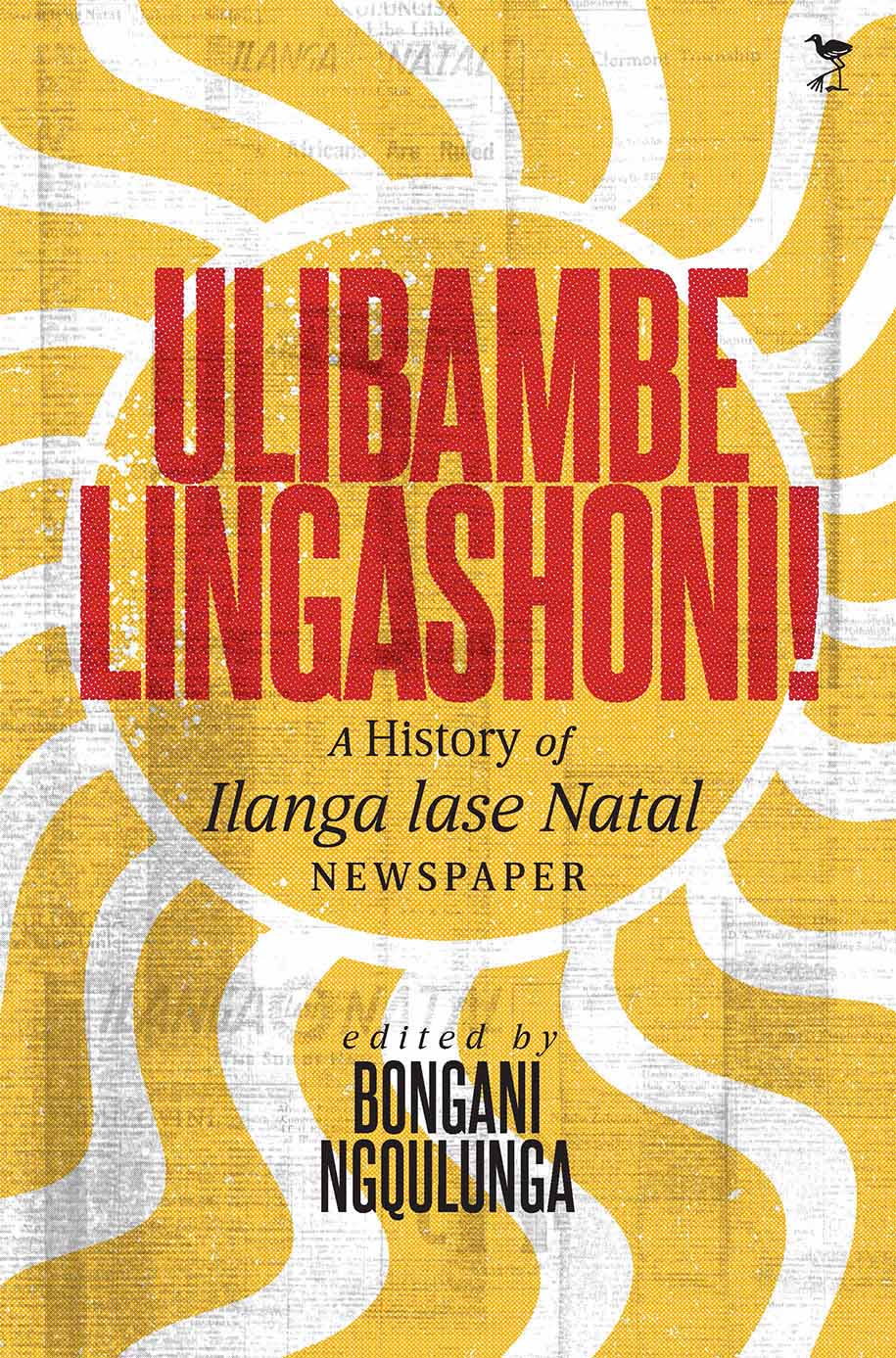
first_president_covwebsmlJohn L Dube is known more for being the founding president of the South African NAtive National Congress (forerunner of the ANC). However, his achievements go way beyond that. He also founded the Ohiange Institue in kwaZulu-Natal as well as an IsiZulu-medium newspaper, Ilanga lase Natal – both are still in operation. In addition to being ordained a priest, he also authored the first IsiZulu nove, Ujege Insila ka Tshaka, which was published in 1930. In First President, the author, Heather Hughes, tries to present Due, the "whole person". She begins by telling the reader about one unfortunate incident in which John Dube's records, sermons, reports, letters and books were stole from his study. This happened in February 1946, immediately after his death.

This presented a difficulty in writing a biography because there were practically no sources. "The absence of this documentary record presents something of a challenge to anyone setting out to piece together an account of John Dube's life, beyond the bare outlines that are already well known," the author says. However, there were some letters that Dube had written to some leading figures, articles that were published as well as speeches. "So there is hope that a biography can be more than just a progress statement," Hughes writes.

To read more of this review click here


The Citizen 29 September 2011

mother_anderson_covwebsmlShoot the Breeze with Ma Anderson

WRITER Stephen Francis and illustrator Rico have lived with Mother Anderson for so long that they're entirely capable of pulling out of their extended back catalogue the pearls of wisdom for which the old bat has become revered – perhaps, reviled, if you're the mielie lady...

So there's no reason to doubt the veracity of peaches such as "If at first you don't succeed, destroy all evidence that you tried".

It's not quite The Prophet, but if you're after something closer to Gin & Tonic For The Soul, and weren't taking life too seriously to begin with, this is a lovely diversion. BRUCE DENNILL 


Secure shopping

VisaMasterClick to Browse

It's happening!

The Big Stick - Lovebooks, Melville - 31 Jan 2012
Jacana Media and Love Books are delighted to invite you to the launch of The Big Stickby Richard de Nooy Date: Tuesday 31 January 2012 Time: 17:30 forRead More

Competition winners

animal_boxset_covwebsml

Congratulations!

St Agnes Primary/Shine Centre in Woodstock, Cape Town has won the Animals of southern Africa box set in our schools and library competition.

shine-logo

Agencies we represent


You can help

For all Jacana events: Please bring high quality children’s and young adults’ books, in good condition, to donate to Equal Education’s book drive for school libraries. 10% of all Jacana Books sold at the event will also go to Equal Education for their library book drive. This is a Jacana Media, Book Lounge, Cape Times and Equal Education initiave.

equaleducation